
Rainy Day in Tokyo? What Happens to Your Garden Tour, and Why Japanese Gardens Shine in the Rain
September is ending and the autumn rain season (akisame) has arrived in Tokyo. The air is soft and damp, and the mornings are finally cool.
One of the questions we hear most often when guests book a tour is: "What happens if it rains?" It's one of the questions on our FAQ, and today I'd like to answer it in a bit more detail. Then, as a gardener, I'll share why a rainy day might be one of the best days to see a Japanese garden.

This photo is from a rainy morning in early September, when I walked through Koishikawa Korakuen with our guests. We put up our umbrellas and took our time around the pond.
The wet paving stones glistened, and the water lily leaves and the trees looked far greener than on a sunny day. It's hard to believe Tokyo Dome is right next door. Only the sound of the rain... this is a side of the garden you only see on a rainy day.
What happens to the tour if it rains?
We're flexible and respond to the weather on the day.
Light rain: After checking with you, we go ahead with the e-bike tour in rain gear. The electric assist makes wet slopes easy.
Heavier rain: Depending on the conditions, we switch to a walking tour.
Typhoons or anything unsafe: If safety can't be ensured, we'll talk with you about rescheduling or cancelling.
If you're worried about the forecast, just get in touch. We're happy to talk it through.

Why a gardener loves Japanese gardens in the rain
Moss comes alive
Moss loves rain. On dry days it curls up and looks brownish, but after a shower it opens up, soft and full, in the brightest green you'll see all year.

Wet stones show their true colors
Stones deepen in color when wet, and their patterns stand out. In the tea ceremony, the host sprinkles water over the roji (tea garden path) before guests arrive, a custom called uchimizu. Japanese people have long treasured the look of wet stone and moss.


The sound of water
Rain tapping on your umbrella, ripples spreading across a pond, a stone water basin (tsukubai) slowly filling. Stand still for a moment and you'll notice how many quiet sounds a garden holds.

There's a Japanese phrase, uki seikō, that comes from a poem by the Chinese Song-dynasty poet Su Dongpo. It means that a landscape is lovely in sunshine and wondrous in the rain. That's exactly how I feel about Japanese gardens.
Things to do in Tokyo's gardens on a rainy day
Walk through a shrine forest
On a rainy day, Meiji Jingu is quieter than usual and the forest smells even richer. Inside the Inner Garden (Gyoen) is Kiyomasa's Well, a peaceful spring where clear water flows.


Take a tea break
When the rain gets heavier, shelter in a garden teahouse. Koishikawa Korakuen, the garden in the first photo, has one too. Sipping matcha with a Japanese sweet while you look out at the garden is a little luxury.

Watch the garden from a tatami room
Some gardens in Tokyo still have traditional Japanese houses where you can sit inside and look out. Sitting on the veranda or a tatami floor, simply watching the rain fall on the garden... people in old Japan surely spent rainy days just like this.

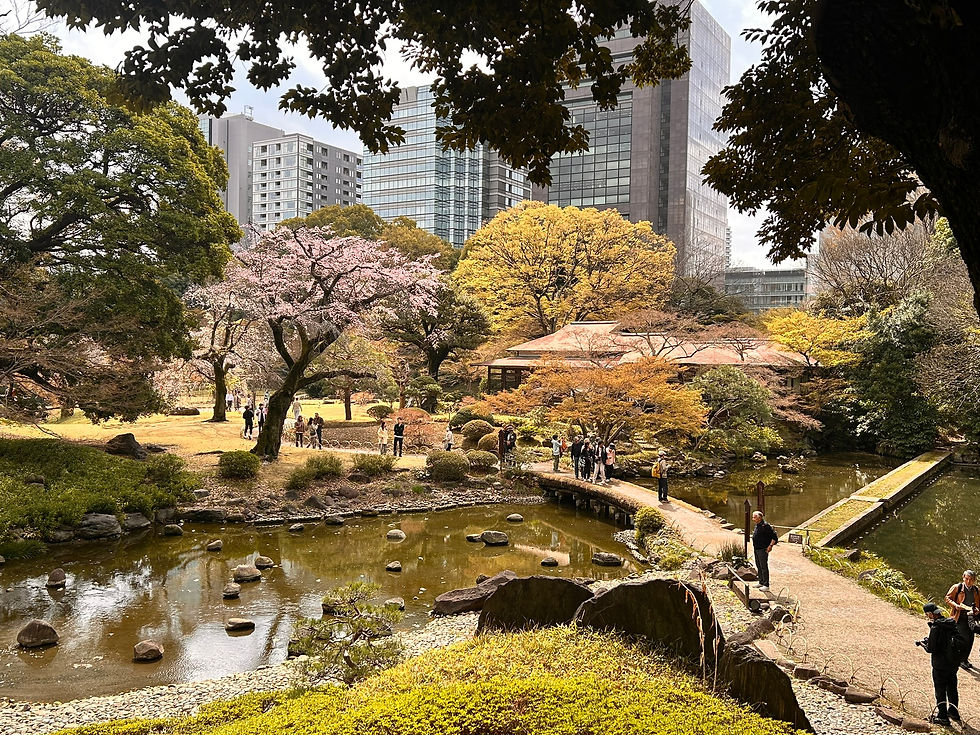
Rainy days also mean fewer visitors, and sometimes you'll have a garden almost to yourself. The guests in the photo above enjoyed the quiet, rain-washed garden too. If it's just a light rain, I hope you'll give it a try.
Frequently asked questions
Q. Do tours run on rainy days?
Yes. In light rain, after checking with you, we run the e-bike tour in rain gear.
Q. What if the rain is heavy?
Depending on the weather, we switch to a walking tour.
Q. What happens if a typhoon is coming?
If safety can't be ensured, we'll discuss rescheduling or cancelling with you.
Q. Which gardens are best on a rainy day?
Gardens with beautiful moss, and gardens with a teahouse or a traditional house, where you can take shelter. Koishikawa Korakuen is a good example: its pond and stones look lovely in the rain, and you can wait out a shower at the teahouse.
Q. When does it rain most in Tokyo?
During the rainy season (tsuyu) in June and July, and during the autumn rains and typhoon season in September and October.
For bookings, please contact us through the Contact page on our website or by email, or check available dates on our booking page.
Besides e-bike tours, bikeTKgardens also offers walking tours and tours using public transportation, tours for families with small children, private charters and tea ceremony experiences in Japanese gardens.


Comments